The Inner Critic and the Power of Self-Compassion
Three practices to turn your inner critic into a source of growth
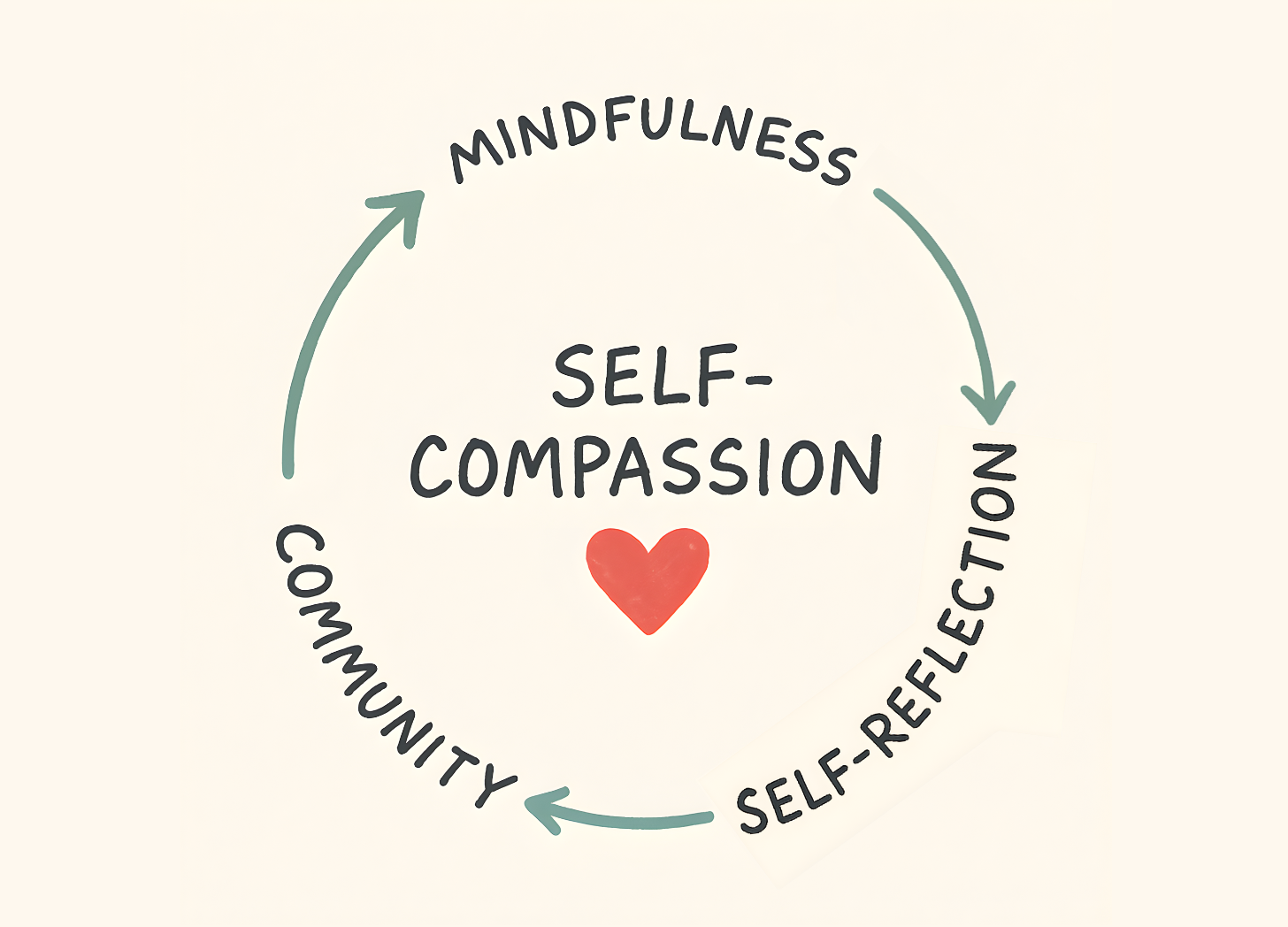
Three simple practices to cultivate self-compassion in your daily life
When I started my business, I expected the joys and challenges of learning something new. What I didn’t expect was that the voice that sounded like a “mean girl,” the pattern I had shifted years ago, would return louder and sharper than ever.
She showed up anytime I made a mistake or had a setback. I noticed this voice was trying to get me to be successful in my new role as an entrepreneur by taking on tactics that it had learned worked in the past.
Thankfully, I was also in the midst of conducting a study on self-compassion and leadership effectiveness for my master’s thesis. This gave me an understanding of the science behind what was going on and how that harsh criticism was impacting my energy capacity. The depleted feeling I was experiencing was real, and it was getting in my way of growing my business.
What I’ve learned is this: self-compassion is not selfish or weak, as some may believe, but instead it is a superpower. If your inner critic is activated, I got you, boo.
Why Harsh Self-Talk Drains You
When you speak harshly to yourself, you are more likely to feel demotivated and stuck. It might get you results in the short run, but eventually it exhausts you.
That energy to battle with yourself, is the energy you can use for creativity, connection and growth.
When you practice kindness toward yourself, it opens up possibilities. It shifts your inner world from fear to curiosity.
Self-Awareness is Your Friend
Self-awareness is an ally in your quest to live your most fulfilling life and work toward your dreams. When leaders replace self-criticism with self-awareness, they are able to move past the internal tension more quickly.
It doesn’t mean that they have arrived at a life where the inner critic doesn’t exist, instead they will notice it sooner. They know how to work with it and what it needs so that they can focus their energy on moving forward.
Three Practices That Help
Three ways to practice self-compassion in daily life.
There are a number of self-compassion practices that can be helpful in navigating your inner critic so that it doesn’t wreak havoc. The three that I find to be most impactful are mindfulness, self-reflection, and support from your community.
1. Mindfulness
In my research and experience, self-awareness is cultivated through mindfulness. It creates the space to notice how you are speaking to yourself and how you are feeling.
In the case of many of my clients, their internal default is such that they do not notice how they are speaking to themselves. Once they start to pay attention, they are able to see it and take action to support themselves in a compassionate way.
Start by finding three to five minutes every day to center yourself and breathe.
You can simply start by noticing how you are treating yourself and setting the intention to shift it day by day.
2. Self-Reflection
Self-reflection is key. Leaders who spend time reflecting on how they are showing up are able to take on self-compassionate actions. Exploring your inner critic and why it is activated can be helpful. Asking yourself how the inner critic is trying to help you can be eye-opening because you can see patterns and choose a way that may be more effective like cheering you on instead of tearing you down.
In that self-reflection, asking yourself an open question interrupts that loop of self-criticism. It opens you up to a different way of relating to yourself and new ideas. It also engages your prefrontal cortex and pulls you beyond getting stuck in the emotion.
When faced with a failure, challenge, or mistake and you notice your inner critic activated, pick three of these self-reflection questions you can ask yourself:
What does my inner critic need?
What can I learn from this challenge or mistake?
What is possible?
If my best friend were going through this, what would I say to support her?
What can I say to myself to support myself in a more helpful way?
Schedule self-reflection at least once a week for 15 minutes by writing in a journal or doing a voice note. If you want to go for the gold, schedule it daily!
3. Support from Your Community
In an individualistic culture like ours, asking for support from people can be uncomfortable, especially for high achievers.
Many of my clients resist reaching out because they don’t want to burden anyone. But they often find that self-compassion grows through connection.
The leaders in my study who built support systems: friends, mentors, coaches, and therapists, showed greater self-kindness. By sharing their mistakes and learnings, they removed the shame of isolation to create room for understanding and reinforcing self-kindness.
Schedule a weekly phone or coffee chat with someone who lifts you up. Find the right coach or therapist who can help you strengthen your relationship with yourself.
A Final Thought
Being kind to yourself is a superpower, use it to help create the life you want.
These three practices, mindfulness, self-reflection, and community, can help you rewire your default patterns of self-criticism and step into your full potential.
I believe in you; you got this.