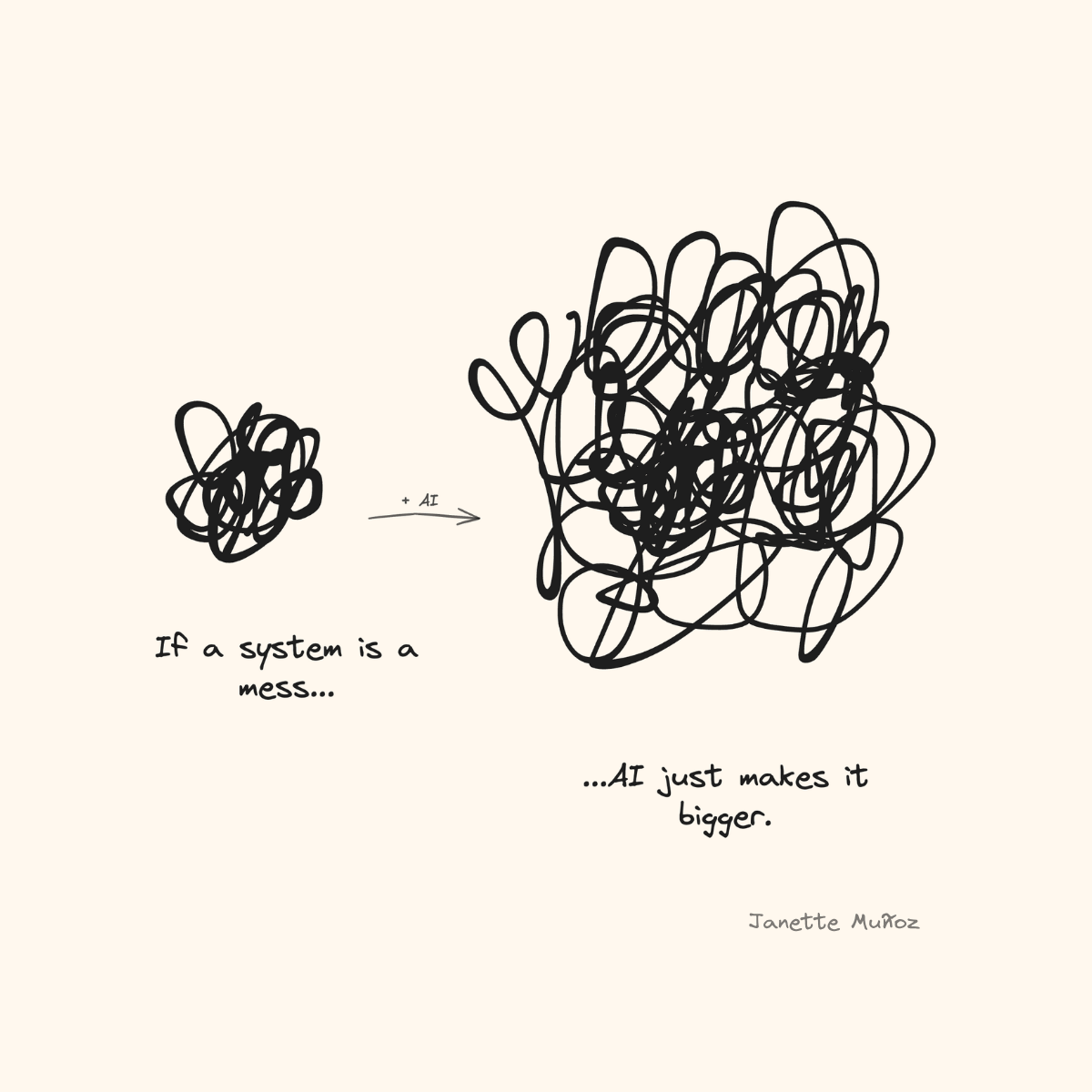
AI doesn’t fix broken systems. It amplifies them.
AI does not fix how work is designed. It amplifies what’s already broken.
Here’s a pattern I’m noticing in the work I do: the assumption that AI gives people more capacity simply creates more task load. That means more tasks, more output and not necessarily better work.
If a system prioritizes speed over judgment, AI accelerates that bias. If people don’t feel safe raising concerns, AI reinforces the silence. If there’s no space to pause and adjust, AI just makes the system more rigid.
A study by BCG found that 70% of AI implementation challenges are related to people and processes, not technology. Yet most organizations are still leading with the tech stack.
At Lunix Leadership, we recently partnered to design a system that honored the culture, strategic priorities, and expectations of a team. It was designed to support the humans in the system and amplify the behaviors we wanted to activate. That led to more sustainable capacity in how they collaborated, made decisions, and prioritized work.
This is not just about technology for the sake of efficiency. It’s about designing systems to support human behavior and habits. It builds capacity to think about what actually matters, to strengthen judgment, creativity, and collaboration.
Organizations that simply automate will move faster (and some faster into the mess). Organizations that assess how work works for their people and adjust it will move better.
Is AI expanding your team’s capacity, or just adding to the task load?